secret
verifiable
decentralized
secret
verifiable
decentralized 
Technical Implementation & Open Source
In 2025, we conducted the first nationwide, self-organized online referendum in Germany using the democratic e-voting system "opn.vote". Around 20,000 people downloaded the digital voting materials, and nearly 13,000 ultimately cast their ballots. The election results are publicly accessible and fully transparent. All votes cast are stored on the blockchain "Gnosis Chain" and are therefore permanent, immutable, and publicly accessible. Using a freely available command-line tool, anyone can independently decrypt and verify their own encrypted vote stored online.
openPetition has developed its own cryptographic voting protocol and created a reference implementation called opn.vote. The software is open source, documented, licensable, and publicly accessible via a GitHub repository. This ensures not only transparency but also the opportunity to further develop, test, or use the system in other contexts.
Use for non-profit purposes is free and will always remain free.
Demo: Our test vote
Are you planning to conduct online voting in your project? Then you should consider opn.vote as a cost-effective and scalable solution designed from the ground up according to democratic principles. opn.vote works either with a predefined voter list or with an open pool of participants who have completed a verification process using ID card or postal PIN verification. Learn more about our verification process here. opn.vote features a web app client that handles the generation of security keys, voter eligibility, and the voting process itself – without any intervention from a central authority.
You can try it out here using this demo election.

Demo: Test-Abstimmung
status
Before and after comparison
We take our users' feedback to heart and evaluate the e-voting system after every successful election. In doing so, we continuously optimize our system, paying particular attention to user-friendliness. The following screenshots provide an initial glimpse of the improvements from 2025 to 2026.
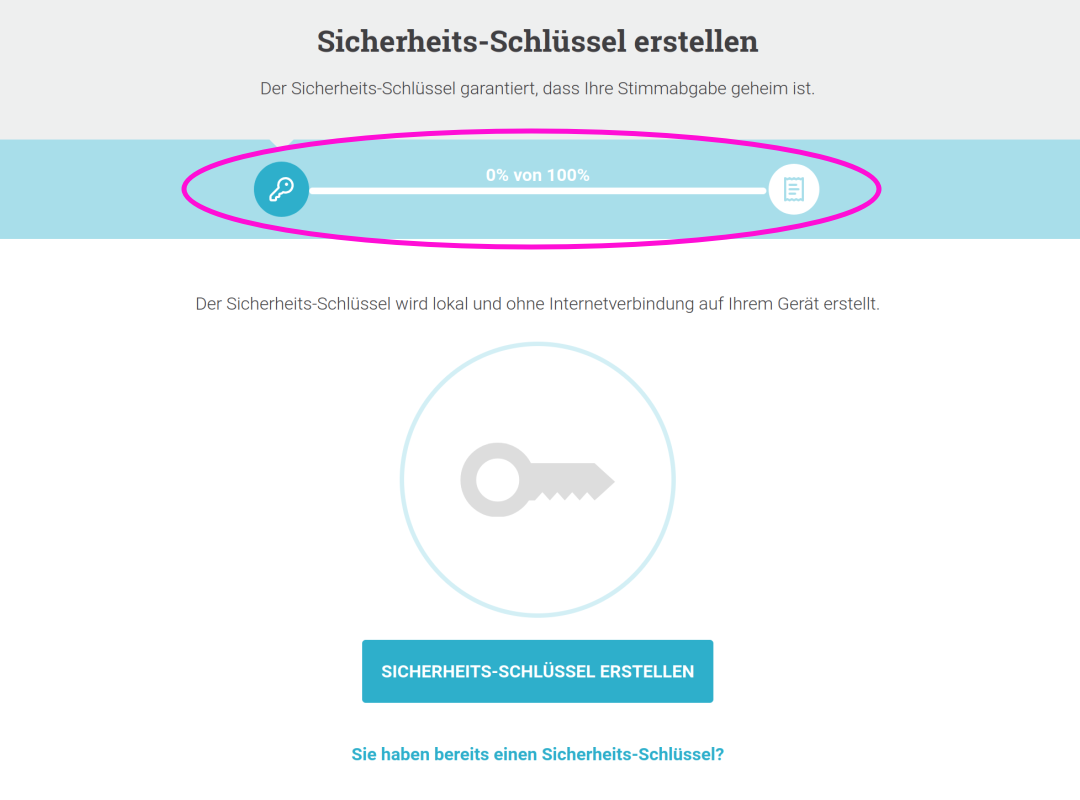
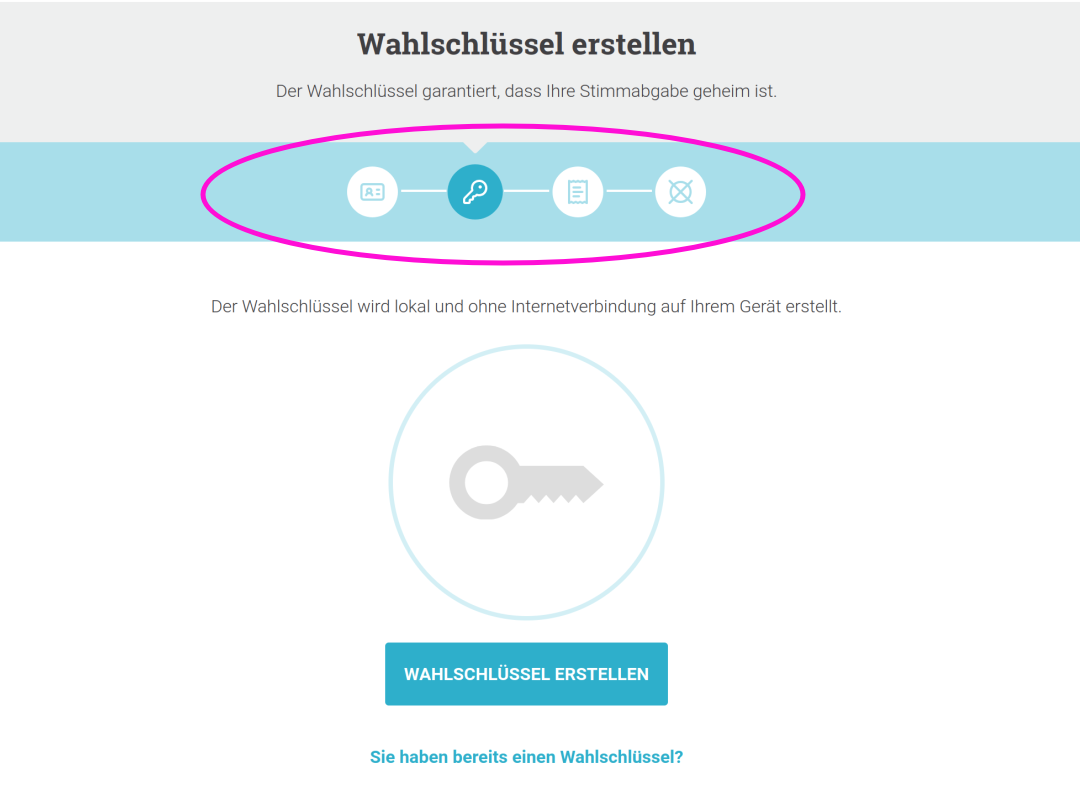
The name "election key" caused confusion for many, as it was often mistaken for the ballot paper. Therefore, we decided to rename it "security key." We also made the election preparation steps clearer by using a progress bar, so it's easier to see when the process is complete.
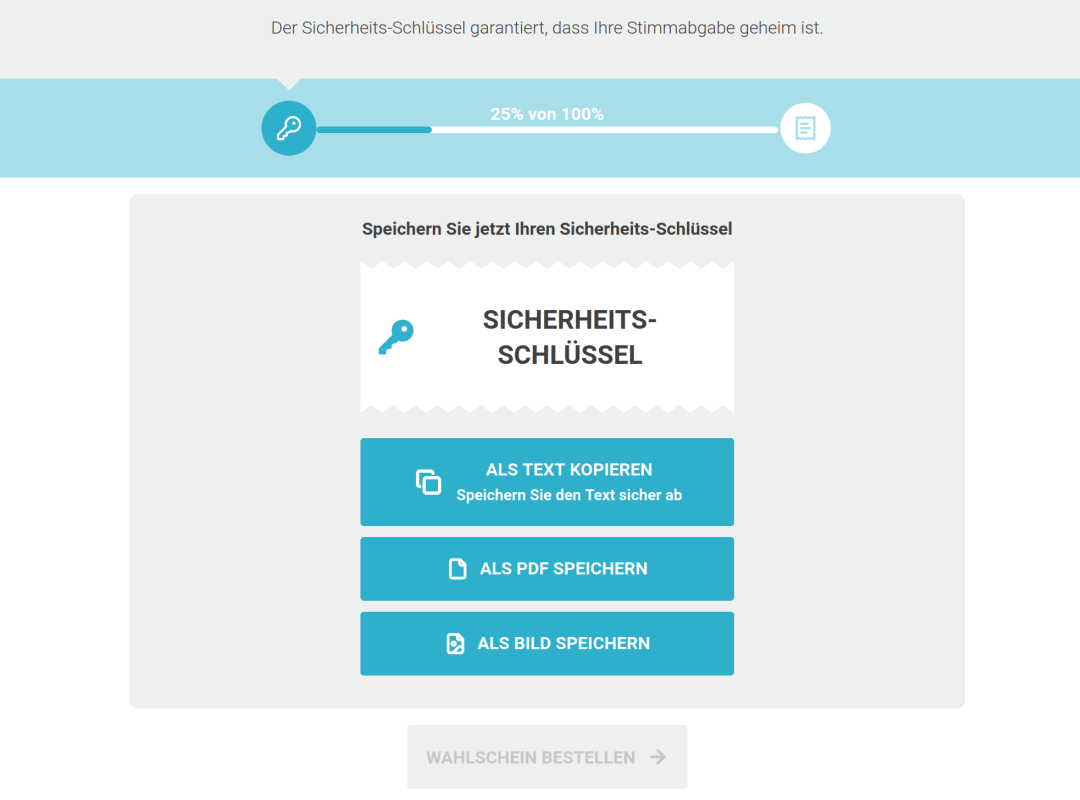
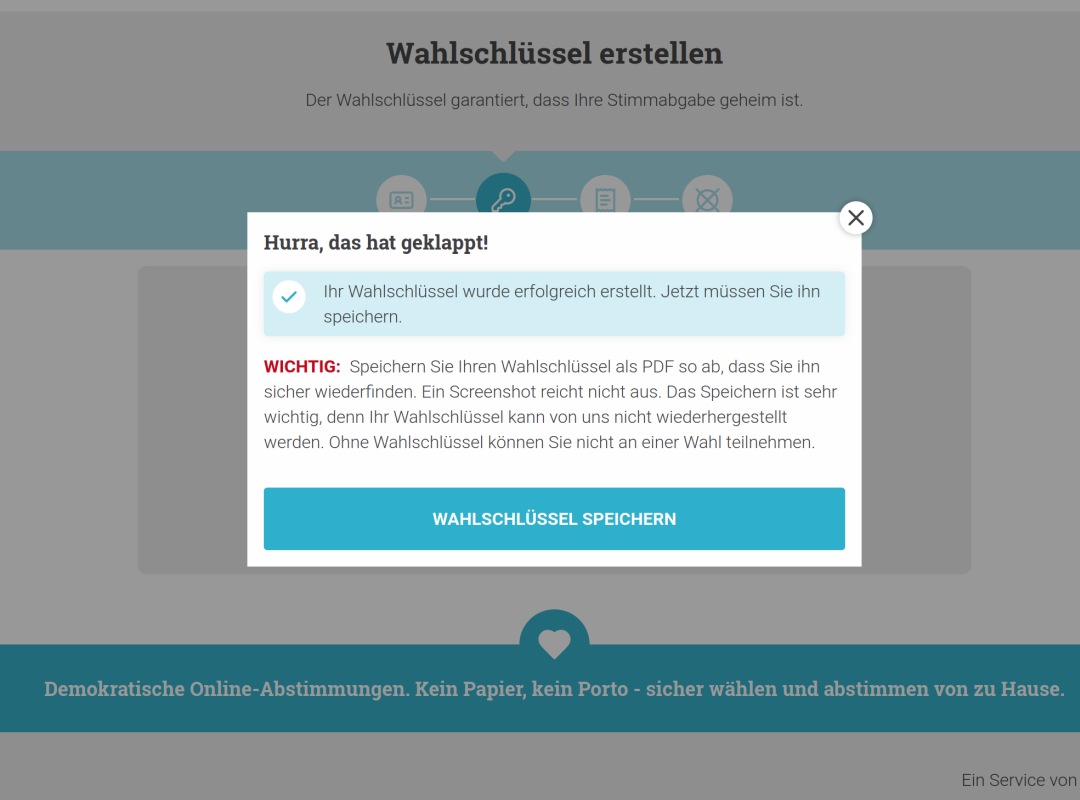
We are eliminating unnecessary modalities and offering users different storage options for the security key and ballot paper. In addition to downloading as a PDF, users can now save their election documents as text or download them as an image.
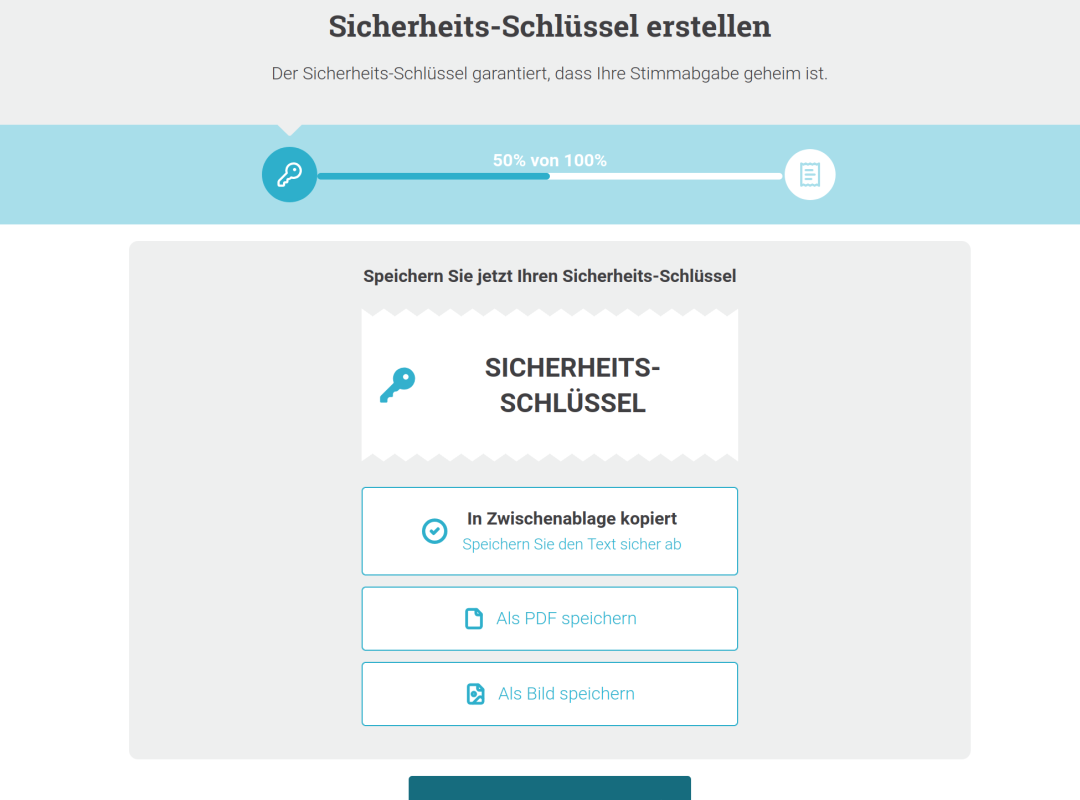
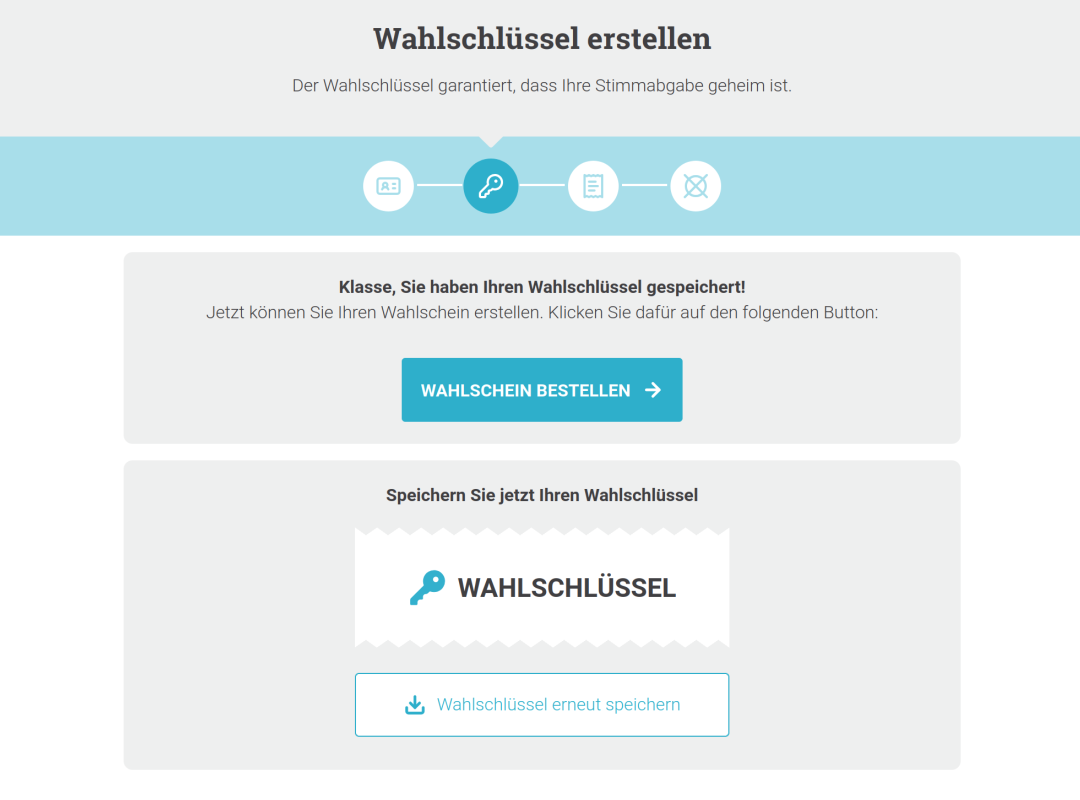
Furthermore, we decided to show buttons that still need to be clicked within the flow, rather than having them appear over existing blocks.
Faces behind opn.vote
opn.vote is conceived and developed by a diverse team of IT, communications, and scientific professionals.







Why Blockchain and Ethereum?
Blockchain technology forms the basis for a modern, trustworthy e-voting system without creating additional technical hurdles for voters. Its decentralized architecture ensures that control is not exercised by a single entity, thus significantly hindering manipulation. Every vote cast is stored transparently, traceably, and publicly verifiable, while at the same time the anonymity of voters is preserved through appropriate cryptographic methods.
A key advantage of blockchain is its immutability: once stored, data cannot be subsequently manipulated. This creates a high degree of security against falsification, significantly hindering election fraud. At the same time, the technology enables fast and cost-effective voting, regardless of location or time. Especially in light of increasingly complex hybrid threats, the decentralized structure offers a crucial security advantage, as there is no single point of attack.
Furthermore, blockchain strengthens democratic processes by replacing trust with transparency: results can be verified by all participants themselves, instead of relying solely on central institutions. This form of distributed control promotes participation and can increase trust in digital voting in the long term. Opn.vote uses an Ethereum-based infrastructure, specifically via the Gnosis ecosystem, which is designed for efficiency and low transaction costs.
Ethereum is particularly well-suited for e-voting because, as an established smart contract platform, it offers a large developer community, extensive tools, and strong network effects. Voting processes can be automated, transparent, and tamper-proof using smart contracts, without relying on a central authority. The open infrastructure also enables independent audits and continuous development.
By switching to the energy-efficient Proof-of-Stake mechanism, Ethereum is now significantly more sustainable than previous blockchain systems and better suited for scalable applications. At the same time, opn.vote benefits from the stability and security of a network that has been proven over many years. Ethereum's value lies not only in its economic aspect, but above all in its role as a global, decentralized infrastructure that is actively used and further developed by numerous projects.
Last but not least, the further development of Ethereum is driven by a strong community and the Ethereum Foundation, which specifically supports meaningful and socially relevant use cases. Particularly in the context of e-voting, this technological and conceptual foundation provides a solid basis for trustworthy digital voting.
Outlook: Next development steps
In the future, election officials will have an admin interface to organize their respective elections/referendums. This will allow them to specify the registration period, the creation of the security key and ballot paper, as well as the voting period. We are also continuously incorporating user feedback: We need to find the right balance between data security and user-friendly practicality. Currently, registration and verification with openPetition are required – we are already working with a university to decentralize the verification process as well. From a technical perspective, we are increasingly reaching out to people in the "Tech for Good" community to network, hear their perspectives on opn.vote, and thereby improve it even further.
Cooperations
Interested in a collaboration? Feel free to send us a message at info@openpetition.net.