A petíció címzettje:
Georgian government
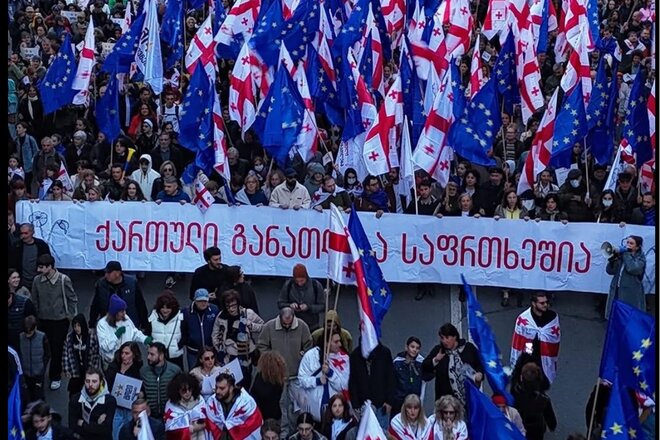
Science is in danger in Georgia. On 16 October 2025, Georgian Prime Minister Irakli Kobakhidze announced a plan to reform universities. This plan envisages the implementation of a ‘one city, one faculty’ policy, which would result in each state university maintaining only one faculty per city through a process of 'reorganization.' On 12 February 2026, these plans were formalized, effectively putting an end to interdisciplinarity and university autonomy—two principles essential to the functioning of science.
Certain institutions are being specifically targeted. For example, Ilia State University is set to lose more than 90% of its disciplines and programs, including the PhD Programme for Socio-Cultural Anthropology. These discontinued disciplines and programs are to be transferred to other state universities already co-opted by the government, primarily Tbilisi State University. In addition, academic disciplines are to be reorganized hierarchically, with only one full professor at the top, followed by associate and assistant professors. This top-down organization ensures strict control over the academic content to be taught.
Ilia State University’s anthropology program is recognized as the country’s foremost hub for anthropological research and teaching, building vital international partnerships and preparing scholars who are fully integrated into global academic networks. It’s the first of its kind, bringing local ethnographic tradition and international scholarship together with multiple international partners, a board of advisors, and the first in the field to establish stipends and scholarships for students. Abolishing this program is part of this regime's larger goal of isolating academia and civil society internationally.
Anthropology is in danger in Georgia. If the ‘one city, one faculty’ policy were to be applied, it is highly likely that certain research topics and approaches that run counter to the prevailing doctrine of the ruling party will no longer be taught, e.g., referring to gender or social activism. Anthropology would be streamlined toward state-nationalist objectives and agendas, in line with developments in Russia and Belarus. This would disconnect our discipline from its own path of development and growth, distancing it from wider disciplinary debates and ethical standards, and would therefore hinder its integration with international anthropological associations such as the EASA and the AAA. The preservation and development of the field of socio-cultural anthropology is of paramount importance not only for academia but also for society as a whole, both in Georgia and worldwide.
Therefore, the decision made by the Ministry of Education and the government must be reconsidered to ensure the continued functioning and development of socio-cultural anthropology at Ilia State University. We oppose the education reforms and reject any cooperation with, or legitimization of, institutions that place socio-cultural anthropology under state control.
The developments we are witnessing in Georgia are not limited to this state; they are harbingers of growing attacks on undesirable disciplines within increasingly authoritarian political regimes. Please show your solidarity by signing this public statement. Our struggle is also your struggle.
Indoklás:


It is crucial to preserve educational programmes and research practice in anthropology in Georgia. This field of scholarship had only recently begun to flourish there. To interrupt this momentum now would mean not only the loss of institutional continuity, but also the weakening of an intellectual infrastructure that supports democratic dialogue and critical public discourse. Sustaining these programmes is therefore not simply an academic concern; it is an investment in the country’s capacity for thoughtful self-understanding and responsible social development. Stand with us in preserving it!